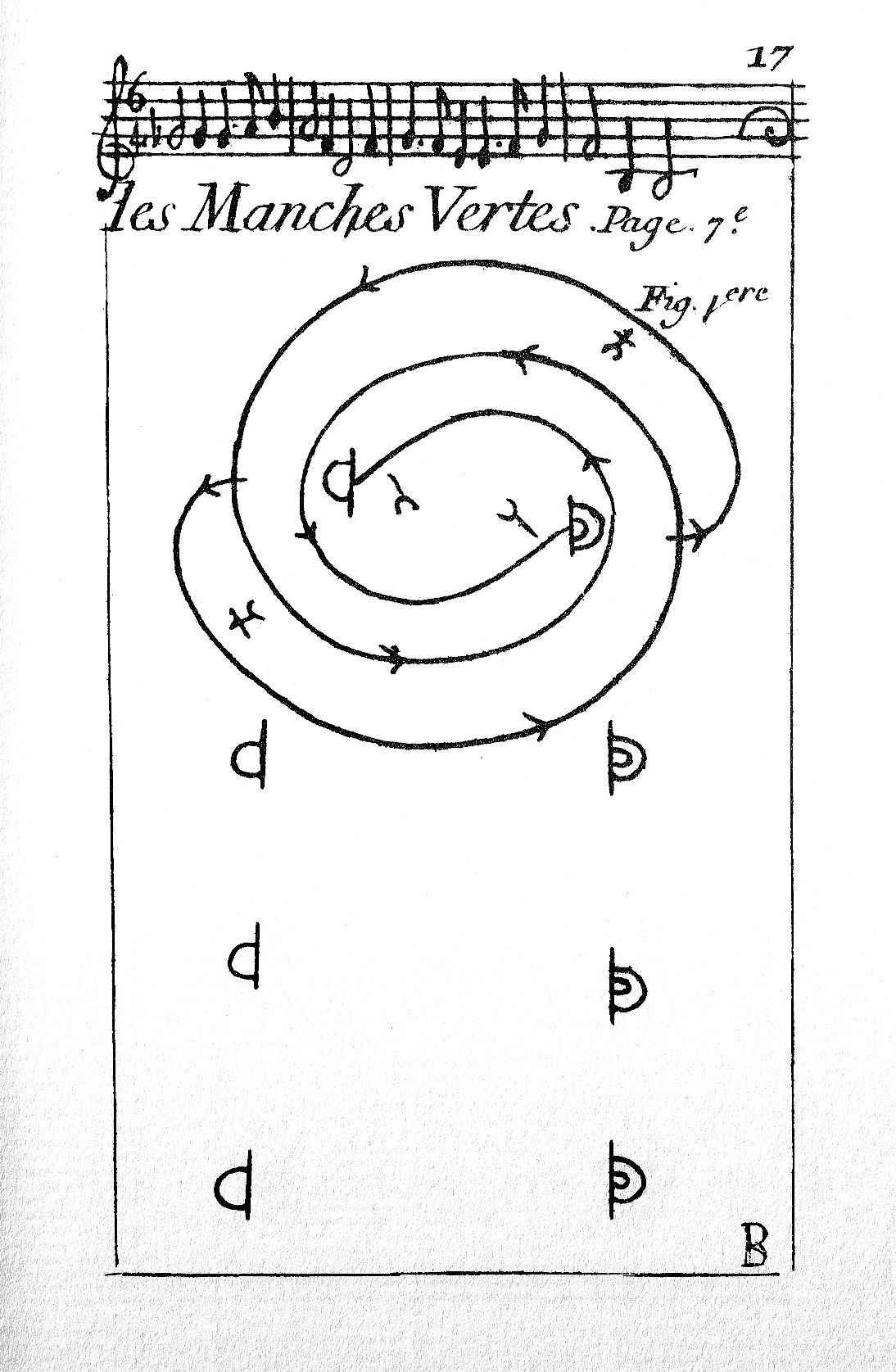
Greensleeves as a Dance
In addition to being so well known as a song, Greensleeves became very popular as a country dance.
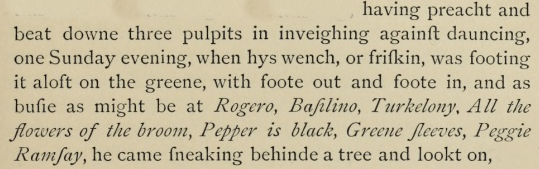
The earliest mention of Greensleeves as a dance is found in a passage from Thomas Nashe´s 1596 pamphlet Have with you to Saffron Walden, mocking a hypocritical preacher who rants against dancing, and then goes out to spy on girls enjoying a lively dance on the Green:
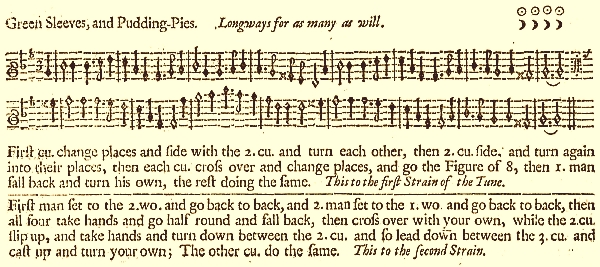
As with so many country dances, although we know Greensleeves was a popular dance by the end of the 16th Century, there is no surviving choreography until late in the 17th Century, when it appears with the name Greensleeves and Pudding Pies in Playford´s Dancing Master in 1686.
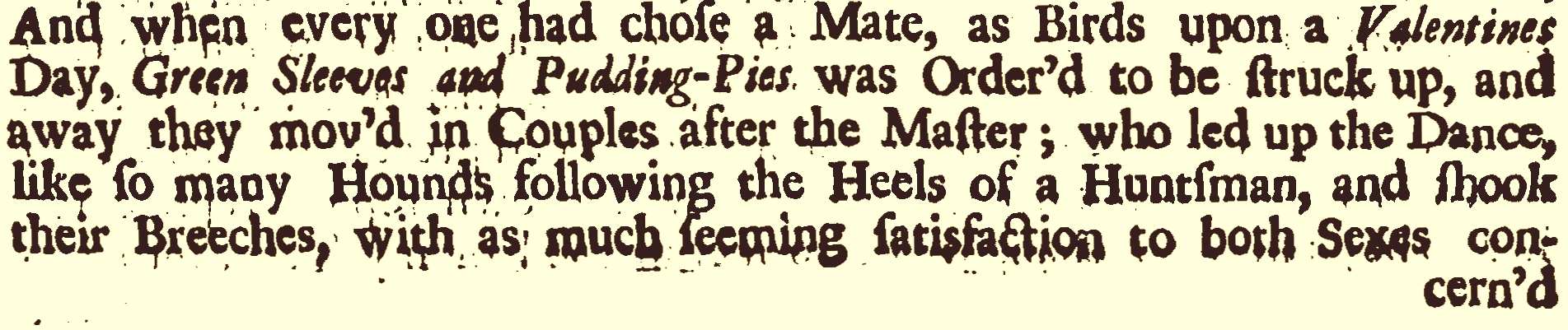
This choreography of Greensleeves and Pudding Pies may be very different from the dance steps of the Greensleeves country dance mentioned nearly a century earlier, but we have some excellent contemporary accounts of people dancing Greensleeves and Pudding Pies
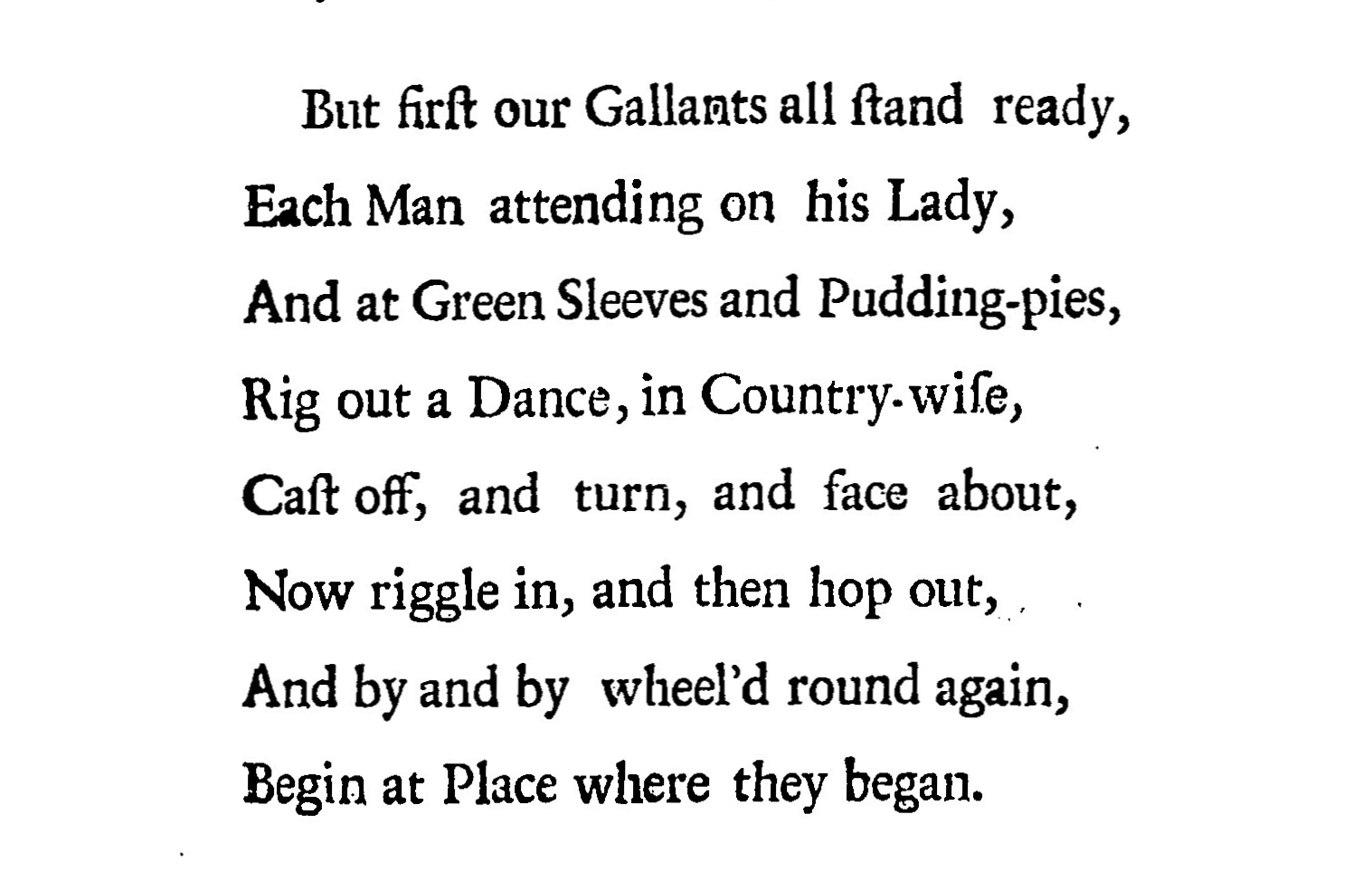
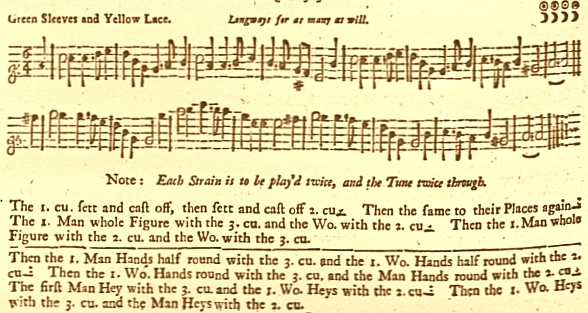
Greensleeves and Pudding Pies was reprinted in all subsequent editions of the Dancing Master until 1721, when the same melody appears with a new name and choreography: Greensleeves and Yellow Lace.
Greensleeves was also exported to France, where it was translated as Les Manches Vertes, and first appeared in Andre Lorin´s Livre de Contredance presente au Roy, c1687, (only a year after the first English edition of Greensleeves and Pudding Pies.)